
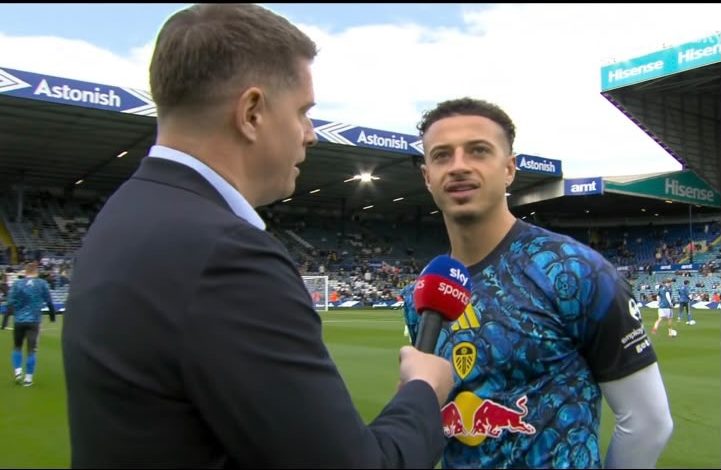
The Welsh midfielder has earned recognition for his leadership, determination and ability to organise those around him. However, playing for a club with the history and expectations of Leeds United means that performances are rarely assessed in isolation.
🚨 ETHAN AMPADU RESPONDS TO PAUL MERSON AFTER LEEDS UNITED’S 1-1 DRAW AGAINST MANCHESTER UNITED — CAPTAIN’S REACTION SPARKS DEBATE AMONG SUPPORTERS!
Leeds United captain Ethan Ampadu has become the centre of attention following his side’s 1-1 draw against Manchester United, with discussions surrounding comments attributed to football pundit Paul Merson adding another layer of controversy to an already closely watched encounter.
The Welsh midfielder has earned recognition for his leadership, determination and ability to organise those around him. However, playing for a club with the history and expectations of Leeds United means that performances are rarely assessed in isolation. Every result is examined, every mistake is discussed, and every player can quickly become the subject of intense debate among supporters and television pundits.
The draw against Manchester United provided another example of the pressure surrounding Leeds as they continue to compete against established Premier League opposition. While the result offered encouragement to those who believe Leeds can challenge stronger sides, it also left supporters examining what the team did well, where improvements are needed and whether individual performances deserved greater recognition.
For Ampadu, the attention goes beyond the final score. As captain, he is expected to provide stability, demonstrate composure and help his teammates maintain their confidence when the pressure increases.
Although reports linking Ampadu’s reaction to comments attributed to Merson have attracted attention, the precise wording of those comments and the midfielder’s alleged response have not been independently verified. Nevertheless, the wider discussion has highlighted an important question: how should players respond when their performances become the subject of criticism from prominent football pundits?
Leeds United Show Determination Against Manchester United
The 1-1 draw against Manchester United gave Leeds United an opportunity to demonstrate their competitive spirit against one of the most recognisable clubs in English football.
Matches between these two sides have historically carried considerable significance. Their rivalry, passionate supporters and contrasting periods of success ensure that meetings between them attract attention well beyond the immediate result.
For Leeds, the challenge was to approach the occasion with confidence without allowing the reputation of their opponents to dictate how they played.
Manchester United possess considerable experience of competing under pressure, and their players are accustomed to matches in which expectations are exceptionally high. Leeds, meanwhile, needed to demonstrate that organisation, commitment and tactical discipline could help them compete effectively.
A draw does not automatically represent a perfect performance, but it can provide valuable encouragement when a team demonstrates that it can withstand difficult periods and remain competitive against quality opposition.
Leeds needed to stay organised, contest possession, defend their penalty area effectively and look for opportunities to threaten Manchester United at the other end.
Those responsibilities would have required concentration from the entire team, particularly in midfield, where losing control of the game can expose the defence to sustained pressure.
Ampadu’s responsibilities in that area are particularly important. His ability to recognise danger, protect the defensive line and communicate with teammates makes him an influential figure in the team’s overall structure.
For Leeds supporters, the result provided reasons to be encouraged while also leaving room for further discussion about the team’s development.
The challenge now is to ensure that performances of this nature become part of a consistent pattern rather than isolated moments of promise.
Ethan Ampadu’s Leadership Comes Under the Spotlight
Being captain of Leeds United involves considerably more than wearing an armband.
Ampadu must help teammates remain focused, communicate tactical instructions and demonstrate the mentality required to compete at the highest level.
His responsibilities become even more significant when Leeds face opponents capable of punishing defensive mistakes and exploiting moments of uncertainty.
Against Manchester United, maintaining discipline across the midfield would have been essential. Leeds could not afford to allow their opponents excessive space between the lines or permit the game to become unnecessarily chaotic.
The captain’s influence in such situations is not always reflected in statistics.
A timely interception, a positional adjustment or a conversation with a teammate can prevent a dangerous situation from developing. Equally, encouraging a player after a mistake can help prevent one difficult moment from becoming a wider problem for the team.
These contributions may receive less attention than goals, assists or spectacular individual performances, but they remain important elements of effective leadership.
Ampadu’s position also means that he cannot avoid scrutiny when Leeds struggle.
Captains are often judged according to the overall performance of their teams, even when the problems extend beyond their individual responsibilities. Supporters expect them to set standards, while pundits frequently examine whether their influence is sufficient to help the team overcome difficult periods.

That expectation comes with the role.
However, leadership should not be measured solely by whether a team wins every match. It should also be assessed through consistency, communication, decision-making and the ability to help teammates respond positively when circumstances become challenging.
The draw against Manchester United offered another opportunity for Ampadu to demonstrate those qualities.
For Leeds, having a captain who understands the importance of collective responsibility could prove valuable as the season develops.
Paul Merson’s Reported Comments Generate Discussion
Paul Merson has spent years analysing football and discussing the performances of clubs, managers and individual players.
His opinions frequently attract attention because viewers are interested in how former professionals interpret the modern game. Having experienced the demands of top-level football himself, Merson often approaches matches from the perspective of someone who understands the pressure players face.
However, football analysis is rarely free from disagreement.
Supporters may interpret a performance differently from a television pundit, particularly when they believe their team has demonstrated qualities that deserve greater recognition.
That difference in perspective can generate heated debate.
Leeds United have a particularly passionate fanbase, and criticism of the club’s players can quickly become a major talking point among supporters.
Some fans may agree with an assessment that highlights weaknesses in the team’s performance. Others may argue that individual players are being judged too harshly without sufficient consideration of their tactical responsibilities or the quality of the opposition.
In Ampadu’s case, the discussion has focused on reports of comments attributed to Merson and the possibility of a response from the Leeds captain.
However, without a verified quotation, it would be inappropriate to present a specific exchange as established fact.
What can be said is that the situation reflects a familiar feature of modern football: the relationship between players, pundits and supporters is often shaped by public discussion immediately after a match.
A single result can generate hours of analysis, while individual performances are dissected through television coverage, social media conversations and newspaper commentary.
For players, this creates an environment in which criticism can spread quickly, sometimes before the full context of a performance has been considered.
Why Leeds Supporters Are Protective of Their Captain
Supporters often develop a strong connection with players who demonstrate commitment to their club.
For many Leeds fans, a captain should embody determination, responsibility and an understanding of what representing the team means.
That does not mean the captain must be immune from criticism. Rather, supporters generally want to see evidence that their leader is prepared to work hard, accept responsibility and help the team improve.
Ampadu’s role makes him a natural focal point for these expectations.
When Leeds produce an encouraging performance, the captain may receive praise for helping the team remain organised. When the team struggles, questions can emerge about leadership, communication and whether the midfield is providing sufficient protection.
Such contrasting reactions are part of the reality of football.
The same player can be praised after one performance and criticised after the next, even when the difference between the two matches is relatively small.
Supporters also understand that a match against Manchester United presents a different challenge from a fixture against a team that adopts a more defensive approach.
The demands placed on midfielders change according to the opposition’s movement, pressing intensity and ability to exploit spaces.
A player who performs well in one tactical situation may encounter different difficulties in another.
That is why individual performances should be assessed within the context of the match rather than through isolated moments.
For Ampadu, the most important response to public debate will ultimately be his performances on the pitch.
Consistent displays, effective communication and strong decision-making can help reinforce confidence in his leadership.
The Pressure of Playing in the Premier League
Premier League football attracts enormous attention because the competition combines high expectations, financial investment and some of the most closely followed clubs in the sport.
Players are regularly assessed by supporters, journalists, former professionals and statistical analysts.
The scrutiny can be particularly intense for clubs with large fanbases and ambitious expectations.
Leeds United fall into that category.
Their supporters want to see the team compete with established opponents, produce entertaining football and demonstrate the determination associated with the club’s identity.
When the team performs well, praise can be widespread. When results disappoint, criticism can quickly become equally intense.
For players, learning to manage this environment is an important part of professional development.
Some footballers respond to criticism by using it as motivation. Others prefer to concentrate on training, tactical preparation and feedback from their coaches rather than becoming involved in public disagreements.
Neither approach necessarily determines whether a player will succeed.
What matters is the ability to separate constructive criticism from noise and remain focused on the responsibilities of the next match.
Ampadu’s role as captain means that his response can also influence the atmosphere around the dressing room.
If he remains composed, encourages his teammates and concentrates on improvement, he can help establish an environment in which criticism becomes an opportunity for reflection rather than a source of division.
That is particularly important during demanding periods of a season, when injuries, difficult fixtures and inconsistent results can test the confidence of an entire squad.
A Draw Is Encouraging, but Leeds Must Keep Improving
While the result against Manchester United provided Leeds with a point, the broader significance of the performance depends on what follows.
Football teams cannot rely on one positive result to establish long-term progress.
They must demonstrate that the lessons learned from each match can be applied consistently against different opponents and in different circumstances.
For Leeds, that means examining both the positive aspects of the draw and the areas requiring improvement.
Their defensive organisation, concentration and ability to remain competitive are important considerations. However, the coaching staff must also assess whether the team created enough meaningful opportunities, managed possession effectively and responded appropriately when Manchester United increased the pressure.
Midfield control will remain a significant factor.
If Leeds can maintain a disciplined shape while moving the ball forward with greater confidence, they may be better equipped to compete against opponents who attempt to dominate possession.
Ampadu can contribute to that process by helping teammates maintain their positions, recognising when to accelerate the tempo and understanding when a more cautious approach is required.
As captain, he must also help ensure that the team does not become distracted by external criticism.
The discussion surrounding Merson may attract attention, but Leeds’ season will ultimately be determined by their performances, results and ability to improve.
A captain who understands that distinction can help keep the team’s priorities clear.
Should Pundits Be More Careful When Criticising Players?
The debate also raises a broader question about the responsibilities of football pundits.
Analysis is an important part of the sport. Supporters want to understand why teams succeed or fail, and former professionals can offer valuable insight into tactical decisions, individual performances and managerial choices.
Strong opinions are part of that process.
However, meaningful analysis should be based on evidence, context and a fair assessment of what happened during the match.
A midfielder may struggle to influence possession because the opposition presses effectively. A defender may appear exposed because the player in front of him fails to track a runner. A striker may receive few opportunities because his team struggles to move the ball into dangerous areas.
Looking at these details can produce a more complete understanding of a performance than simply blaming one individual.
At the same time, players should not expect to avoid criticism whenever they make mistakes.
Professional footballers operate in a competitive environment, and their decisions can have a direct impact on results. It is reasonable for analysts to question poor performances, tactical shortcomings and errors that cost teams valuable points.
The distinction lies in how that criticism is delivered and whether it is supported by the available evidence.
In Ampadu’s case, the reported discussion involving Merson illustrates why verified quotations and context matter.
Without confirmation of the precise comments or the captain’s alleged response, the focus should remain on the wider debate rather than an unverified confrontation.
Ampadu Must Keep His Focus on Leeds United
For all the attention surrounding pundit criticism, Ampadu’s immediate responsibility remains his football.
The Leeds captain must continue preparing for upcoming fixtures, working with his teammates and helping the club maintain its competitive standards.
Public debate can create distractions, particularly when comments are repeated across social media and interpreted in different ways.
However, allowing outside discussion to dominate the team’s attention would do little to improve performances.
The strongest response available to any professional footballer is consistency.
If Ampadu continues to demonstrate discipline, make effective decisions and contribute to the team’s organisation, he can strengthen his position as a leader.
If mistakes occur, addressing them through training and tactical preparation will be more productive than allowing criticism to become a personal dispute.
Leeds also need their captain to encourage collective responsibility.
Football is a team sport, and the outcome of a match depends on the combined efforts of defenders, midfielders, forwards and the coaching staff.
Even a strong captain cannot solve every problem alone.
The objective should be to build a team capable of responding positively to setbacks and maintaining its standards when the pressure increases.
That is the kind of mentality Leeds will need if they want to turn competitive performances into a sustained run of positive results.
The Verdict: The Football Must Come First
Ethan Ampadu’s position as Leeds United captain ensures that his performances will continue to attract attention, particularly when the club faces high-profile opponents such as Manchester United.
The 1-1 draw provided an opportunity for Leeds to demonstrate their determination, while the discussion surrounding comments attributed to Paul Merson has created another talking point for supporters.
Nevertheless, the precise details of the reported exchange remain unverified, and no specific response should be attributed to either man without reliable confirmation.
The wider lesson is clear: football criticism is an inevitable part of the modern game, especially for players representing clubs with ambitious supporters.
Pundits are entitled to analyse performances, supporters are entitled to express their opinions, and players are entitled to concentrate on their responsibilities.
For Ampadu, the challenge is to ensure that outside noise does not distract him from leading Leeds United.
The captain’s influence will be measured by his performances, his contribution to the dressing room and his ability to help the team remain focused during difficult moments.
For Leeds supporters, the priority is equally straightforward. They want a team that competes with determination, learns from its mistakes and delivers consistent performances.
The draw against Manchester United may provide encouragement, but the real test will come in the matches that follow.
Ultimately, the most convincing answer to any criticism will not be a headline, a heated exchange or a debate between a player and a pundit.
It will be what Ampadu and Leeds United do on the pitch.