European football has been thrown into fresh turmoil after UEFA released explosive VAR audio from the controversial Europa League clash between FC Porto and Nottingham Forest
DAMNING VAR AUDIO SPARKS FULL-BLOWN CRISIS AFTER PORTO vs FOREST.
European football has been thrown into fresh turmoil after UEFA released explosive VAR audio from the controversial Europa League clash between FC Porto and Nottingham Forest—and instead of calming tensions, it has ignited a full-scale officiating crisis.
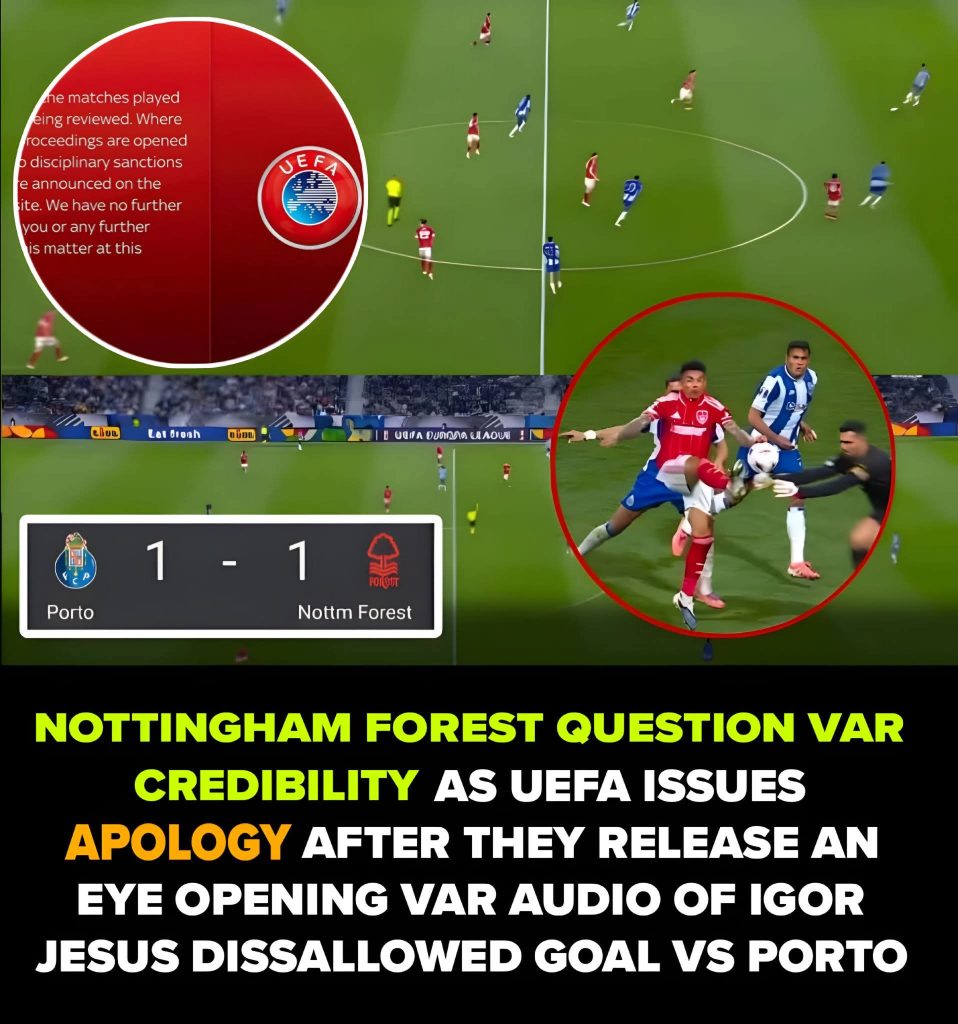
The match, played at the Estádio do Dragão, ended in a 1-1 draw, but the result has been overshadowed by a highly disputed decision to disallow a second-half goal from Forest forward Igor Jesus. At the time, referee Marco Guido ruled out the strike following VAR intervention, citing a foul on Porto goalkeeper Diogo Costa.
In a rare move, UEFA published the full VAR audio in an effort to provide transparency. However, the decision has dramatically backfired. The recordings reveal moments of hesitation, fragmented communication, and apparent uncertainty among officials reviewing the incident. Rather than a clear-cut application of the rules, the discussion appeared to show conflicting interpretations—particularly regarding whether sufficient contact had been made to justify disallowing the goal.
Phrases suggesting doubt and lack of conviction have fueled outrage online, with fans and pundits questioning how such a pivotal call could be made without consensus. Officials from Nottingham Forest are understood to be furious, with sources indicating the club is considering a formal complaint. The English side believes they were denied a legitimate goal in a crucial European tie, a moment that could significantly impact their progression in the competition.
Supporters have echoed those frustrations across social media, where the audio quickly went viral. Many argue the release has exposed deeper flaws within VAR decision-making rather than reinforcing trust in the system. Amid mounting criticism, UEFA has issued an apology, conceding that the officiating process “did not meet the expected standards.” While the governing body stopped short of overturning the decision, it acknowledged that improvements are urgently needed in both communication and consistency.
This latest controversy adds to a growing list of VAR-related disputes across European competitions. What was introduced as a tool to eliminate clear errors is now facing renewed scrutiny over its reliability—and whether it is instead introducing new layers of confusion.
For many observers, this incident marks a tipping point. What began as a single controversial decision has now evolved into something far more serious—a crisis of confidence in VAR at the highest level of the game.With the second leg looming, the spotlight will remain firmly fixed not just on the players—but on the officials, and a system that is once again under fire.