“The Day the Goals Fell”: 30 Years Since Brighton’s Defining Act of Defiance
It was a moment that shocked English football—but ultimately helped save a club from extinction.
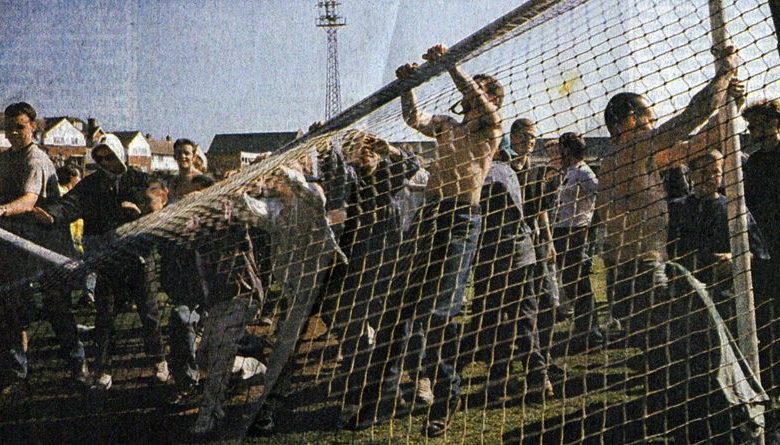
Thirty years ago today, fans of Brighton & Hove Albion stormed the pitch at the Goldstone Ground, forcing the abandonment of a league match against York City after just 16 minutes. In scenes that would become etched in football history, supporters snapped the goalposts in two, halting play and igniting national outrage.
At first glance, it looked like senseless disorder—an unprecedented breakdown from a fanbase long regarded as among the most loyal and well-behaved in the country. Headlines branded it a “riot,” and questions were quickly raised about what could drive such normally composed supporters to such extremes.
But the answer, once uncovered, would change the narrative entirely.
Behind the chaos lay a growing fury at the actions of club directors Bill Archer, Greg Stanley, and David Bellotti. Fans accused the trio of systematically dismantling the club’s assets—most notably the sale of the Goldstone Ground—while showing little regard for Brighton’s future. For many, the club’s very existence was under threat.
The pitch invasion was not random; it was a desperate act of protest. Supporters believed they were witnessing the slow death of a 95-year-old institution, and that drastic action was the only way to force attention on what was happening behind the scenes.
And it worked.
The incident became a national talking point, prompting wider scrutiny of how football clubs were being run. As details of the boardroom decisions emerged, public sympathy shifted dramatically toward the fans. What had initially been condemned as hooliganism was increasingly understood as a last stand against mismanagement and asset-stripping.
In the years that followed, the protest proved to be a turning point. It galvanized the Brighton fanbase, leading to sustained campaigns that would eventually preserve the club’s identity and future. The journey was long and often painful—exile from their home, financial struggles, and years in the lower leagues—but survival was secured.
Today, as Brighton & Hove Albion enjoy stability and success far removed from those turbulent times, the events of that day remain a powerful reminder of the role supporters can play in protecting their club.
What began with broken goalposts ended with a united movement—and, ultimately, a club saved from the brink.
Brady, as always, was spot on. It was a different kind of riot. And whilst the media coverage sensationalised the event and the photos of fans swinging from broken crossbars looked bad, there was no violence involved at all.
It was just destruction of property – property which Albion fans had more right to claim that Archer, Bellotti and Stanley. After all, the Goldstone had been Brighton’s home since 1902. Those three had rocked up a few years earlier with the sole intention of running the club out of business.
The police knew some form of protest was going to take place and they allowed supporters to spill onto the pitch from the North Stand and the South West Terrace. Once the goals were snapped in two, there was no hope of the game continuing.
That meant there was no pressure from the police to clear the pitch and restore order to get the game restarted, allowing the riot to take its course and the most unlikely of rioters to enjoy themselves.
For what the media did not show were the group of old ladies who were sat on the halfway line, chatting as if they were at a picnic rather than a riot. My friend and I had a miniature football to kick around on the pitch for an hour after the game was forcibly abandoned.