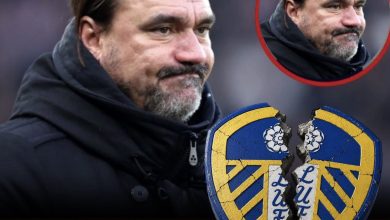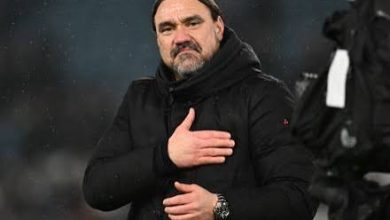
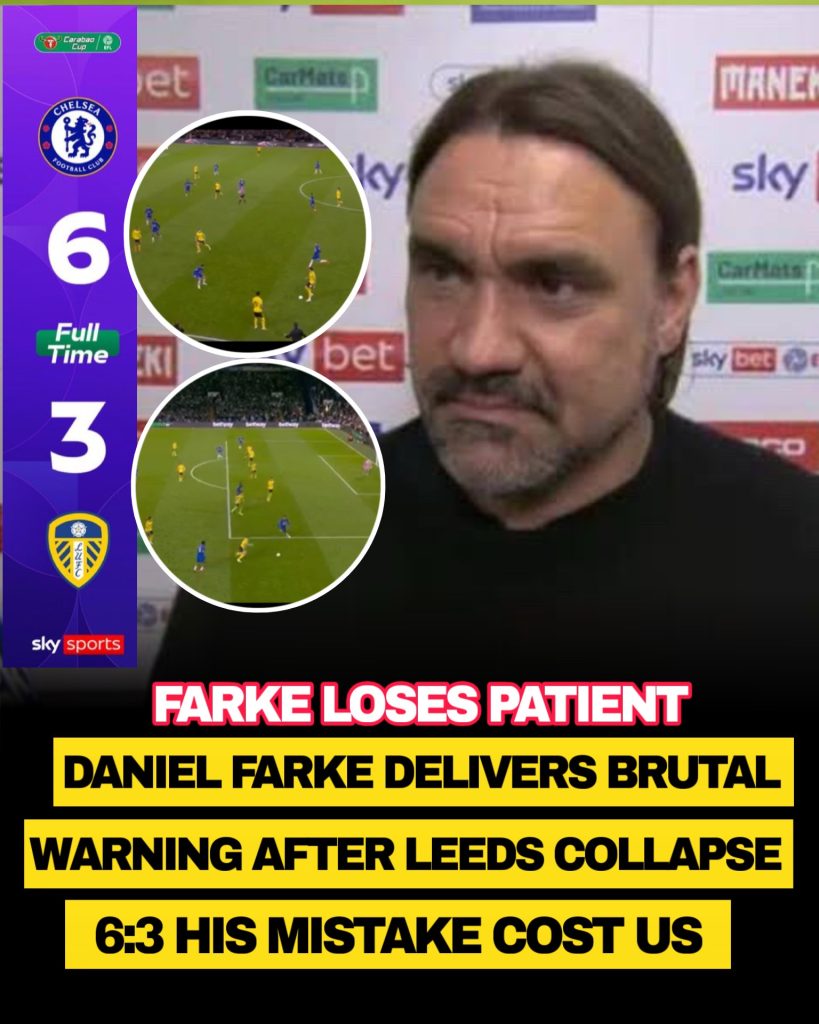
Daniel Farke has delivered a brutal assessment of Leeds United’s Carabao Cup exit, appearing to single out one player after a devastating collapse against Chelsea.
“As Long as I Remain the Coach Here, He Won’t Play for Leeds United Again” — Daniel Farke Pinpoints Player After Chelsea Collapse
Leeds looked to be in control after taking a 2–0 lead, but what followed was a nightmare seven-minute spell that completely changed the contest. Defensive mistakes allowed Chelsea to turn the game around, with Leeds eventually suffering a heavy 6–3 defeat and crashing out of the competition.
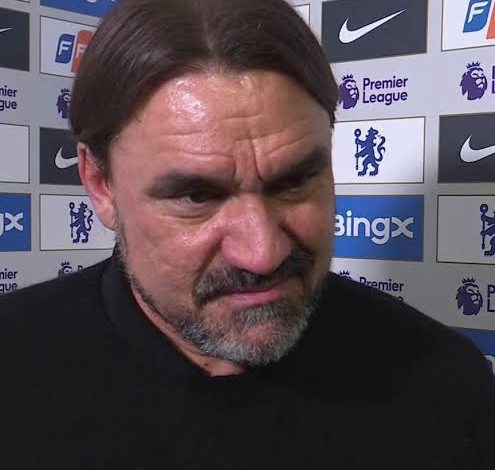
Speaking after the match, Farke did not hide his frustration. The Leeds manager was particularly critical of the individual errors that contributed to Chelsea’s comeback, describing the performance as one of the worst he had witnessed from a player under his management.
“We were leading 0–2,” Farke said. “His mistakes made us concede three goals in the space of seven minutes.”
The Leeds boss continued with an even stronger warning, suggesting that the player’s future opportunities could now be seriously questioned.
“As long as I remain the coach here, he won’t play for Leeds United anymore.”
The comments have immediately attracted attention among Leeds supporters, particularly because the team had appeared to have the match firmly under control before everything suddenly unravelled.
Leeds entered the match knowing that Chelsea would provide a major test, but they started with confidence and aggression. The visitors were able to create opportunities and establish a two-goal advantage, giving supporters genuine hope that Farke’s side could produce one of the biggest results of their campaign.
At 2–0, the momentum appeared to be firmly with Leeds.
However, football can change in an instant.
Chelsea increased the pressure and Leeds began making costly mistakes. Rather than calmly managing their advantage, the Yorkshire side struggled to deal with Chelsea’s attacking pressure.
The decisive turning point came during a remarkable seven-minute period.
Three goals were conceded in quick succession, transforming a comfortable Leeds lead into a match that suddenly appeared to be slipping completely out of their hands.
For Farke, the nature of those goals was perhaps more frustrating than the scoreline itself.
Leeds had worked hard to build their advantage, only for individual errors to undo their efforts almost immediately.
The manager’s comments suggest that he believes the collapse was not simply a collective tactical failure. Instead, he appeared to place significant responsibility on one particular player whose mistakes repeatedly exposed the team.
That is why his post-match statement has caused such a strong reaction.
Saying that a player will not play for the club again as long as he remains manager is an extraordinary declaration from any head coach. It indicates just how disappointed Farke was with what he witnessed.
The 6–3 scoreline eventually reflected a complete change in momentum.
Chelsea gained confidence after their comeback, while Leeds struggled to regain control. Once the home side had turned the match around, Leeds were forced to chase the game rather than dictate it.
For the supporters, the defeat was particularly painful because of how promising the opening stages had been.
Going 2–0 ahead against a strong Chelsea side should have represented an opportunity for Leeds to demonstrate their character and game management. Instead, the collapse exposed weaknesses that Farke will now have to address.
The Carabao Cup exit also means Leeds have missed an opportunity to progress further in a competition that can provide valuable minutes for squad players and young talents.
Farke is therefore facing difficult questions about his squad selection and the reliability of certain players.
The Leeds manager has always demanded discipline, concentration and responsibility from his players. When those qualities disappear, particularly during important moments, managers can be extremely unforgiving.
The Chelsea comeback demonstrated exactly why.
Leeds were not simply beaten after being outplayed from the opening whistle. They had established a two-goal advantage before losing control in spectacular fashion.
For Farke, that makes the defeat even harder to accept.
The manager will now be expected to review the match carefully and decide which players can be trusted in future games. His comments suggest that at least one member of the squad may have damaged his chances of receiving another opportunity.
The phrase “as long as I remain the coach here” is particularly significant.
It leaves little doubt about Farke’s current feelings, although the exact circumstances surrounding the player’s mistakes will need to be considered before drawing conclusions about his long-term future.
What is clear is that Farke believes the individual errors were unacceptable at this level.
Leeds supporters are now debating whether the manager was right to be so direct.
Some fans will argue that players should be protected publicly and that defeats are collective. Others will believe that certain performances deserve consequences, especially when individual mistakes directly contribute to conceding several goals in a short period.
There is also the question of confidence.
If a player is publicly blamed by his manager after such a heavy defeat, returning to the team can become extremely difficult. The pressure from supporters, media and teammates can increase dramatically.
For Leeds, however, the most important issue is how they respond.
A 6–3 defeat can have an emotional impact, but Farke cannot allow the result to derail the team’s wider ambitions. The Carabao Cup is now over for Leeds, meaning attention must quickly turn back to league football.
The manager will need his players to show that the Chelsea collapse was an isolated disaster rather than a sign of deeper problems.
The biggest lesson is obvious: a two-goal lead means very little if concentration disappears.
Leeds had the advantage. They had the momentum. They had the opportunity to control the match.
But within seven minutes, everything changed.
Three goals conceded in such a short period turned a potential statement victory into a humiliating cup exit.
Farke’s anger is therefore understandable.
His comments will undoubtedly dominate the conversation around Leeds for the next few days, particularly the extraordinary suggestion that one player could be frozen out of the team for the foreseeable future.
For now, the player has been placed firmly under the spotlight.
Leeds United must move forward, but the Chelsea defeat has exposed serious questions about defensive concentration, individual responsibility and squad depth.
Farke will have to decide whether changes are needed immediately.
One thing is certain: after watching his side surrender a 2–0 lead and concede six goals, the Leeds manager is clearly not prepared to tolerate another performance of the same nature.
The Carabao Cup journey is over, and the damage from Chelsea’s comeback could extend beyond the result.
For the player Farke appeared to blame, the consequences could be even greater.
If the manager’s words are taken literally, his Leeds United future may now be hanging by a thread.