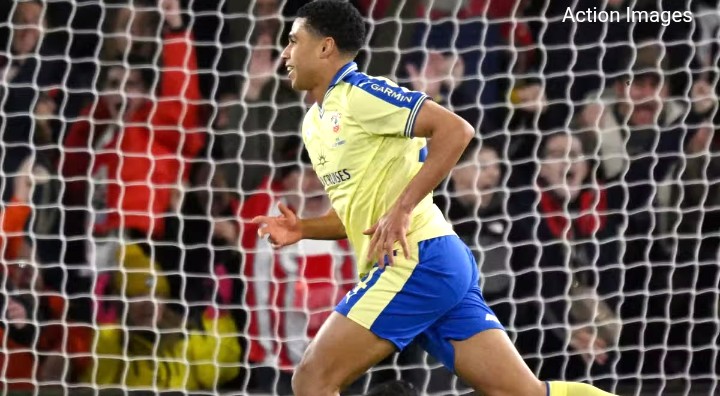
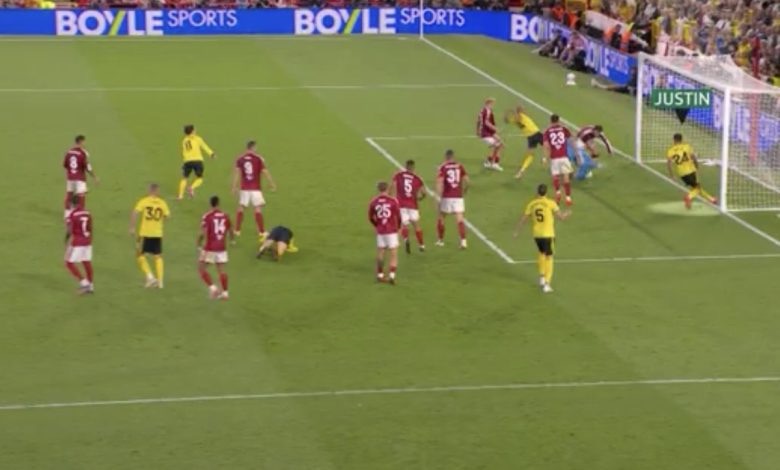
Leeds United supporters have been left debating one of the biggest talking points from Tuesday night’s Carabao Cup victory over Nottingham Forest, with fresh claims surrounding James Justin’s controversial second goal threatening to take the conversation in an entirely different direction.
OFFSIDE OR NO OFFSIDE? EFL CLAIMS COULD TAKE LEEDS UNITED’S CONTROVERSIAL GOAL TO ANOTHER LEVEL
Leeds United supporters have been left debating one of the biggest talking points from Tuesday night’s Carabao Cup victory over Nottingham Forest, with fresh claims surrounding James Justin’s controversial second goal threatening to take the conversation in an entirely different direction.
What initially appeared to be a straightforward moment of controversy has now developed into a much bigger talking point among supporters, with questions being raised about the positioning of Leeds players during the build-up and whether an offside offence may have occurred.
I CAN’T BELIEVE WHAT I’M READING RIGHT NOW.
Claims circulating following the match suggest that the EFL has questioned whether there was an offside offence in the build-up to Leeds United’s second goal.
If such a position were ever officially confirmed, it would inevitably lead to questions over the validity of the goal and whether any further action could follow.
But before Leeds supporters begin worrying about a possible replay, there is one extremely important point that needs to be made: there is currently no verified evidence that the EFL has ordered a replay or officially ruled that Leeds’ goal should be disallowed.
That distinction is crucial.
CONTROVERSY ERUPTS AFTER LEEDS GOAL
The Carabao Cup meeting between Leeds United and Nottingham Forest was already attracting plenty of attention because of the intensity of the contest.
Leeds, under Daniel Farke, were determined to continue their progress after returning to the Premier League, while Forest entered the match hoping to produce a strong cup performance.
Instead, the game produced another moment that has left supporters studying replays and discussing the officials’ decisions.
James Justin’s second goal quickly became the centre of attention, with some supporters questioning the positioning of players in the build-up.
From certain angles, there have been suggestions that an attacking player may have been in an offside position.
From other angles, however, the situation appears far less clear.
That is precisely why the controversy has continued to grow.
Football supporters have become accustomed to seeing extremely tight offside decisions determined by technology, but cup competitions can involve different officiating arrangements depending on the stage and venue.
As a result, whenever a controversial goal is scored, supporters naturally begin asking whether the officials had access to the same tools and checks normally associated with Premier League matches.
COULD THE GAME ACTUALLY BE REPLAYED?
That is now the question spreading among some Leeds supporters.
Could Leeds United and Nottingham Forest actually be forced to replay the match if the goal was found to have been incorrectly awarded?
At present, there is no confirmed evidence that this is going to happen.
An incorrect refereeing decision does not automatically mean that a football match is replayed.
In fact, replays are extremely unusual and generally require exceptional circumstances rather than simply an error made during a match.
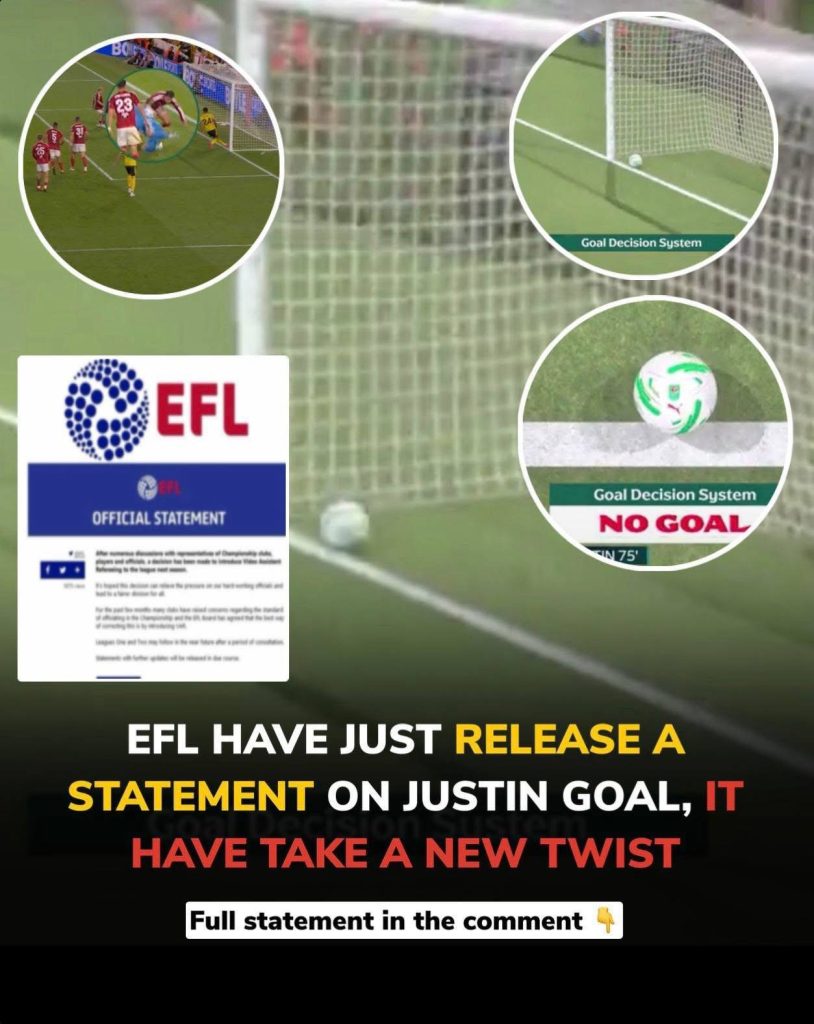
That means supporters should be extremely cautious about claims circulating online suggesting that the EFL has already reached such a conclusion.
A social media post, supporter account or unverified report saying that the EFL is investigating something is not the same as an official announcement from the competition’s governing authorities.
WHY THE OFFSIDE QUESTION MATTERS
The reason this particular incident has attracted so much attention is because an offside decision can fundamentally change the validity of a goal.
If an attacking player is judged to have been in an offside position and becomes involved in the phase of play, the goal could potentially be ruled out.
But offside law is not simply about where a player’s feet are positioned.
The relevant question can involve whether the player was interfering with play, interfering with an opponent or gaining an advantage from being in that position.
That makes still images particularly dangerous when attempting to reach a definitive conclusion.
A single frame can make a player appear clearly offside, while another frame moments later can show a completely different picture.
This is why any genuine review would need to consider the complete sequence rather than relying on screenshots circulating across social media.
LEEDS FANS DEMAND ANSWERS
For Leeds supporters, the controversy is understandably frustrating.
Fans want clarity, particularly when a major decision could potentially influence the outcome of a cup tie.
The immediate reaction online has been divided.
Some supporters believe the goal should stand and argue that there was nothing sufficiently clear to overturn the referee’s decision.
Others have questioned whether an offside offence was missed and believe the incident deserves closer examination.
There is also a third group urging everyone to wait for official information before drawing conclusions.
That may ultimately be the most sensible position.
WHAT HAPPENS NEXT?
Unless the EFL releases an official statement or another authoritative source confirms that the goal is being formally reviewed, there is no reason to assume that Leeds United will be asked to replay the match.
The result therefore remains Leeds United’s victory unless and until an official decision says otherwise.
For now, the biggest story is not a confirmed replay or a confirmed ruling against Leeds.
It is the controversy itself.
The claims surrounding James Justin’s goal have opened a fresh debate about officiating, technology and the standards expected in major cup competitions.
And because the match involved two high-profile English clubs, the argument is unlikely to disappear quickly.
For Leeds United, the priority will be to move forward and focus on what comes next rather than becoming distracted by speculation.
For Nottingham Forest, meanwhile, supporters will understandably feel entitled to ask whether every relevant aspect of the goal was correctly assessed.
But until the EFL itself provides clarification, claims of a replay should be treated with considerable caution.
So, offside or no offside?
That remains the question.
What is clear is that the controversy surrounding Leeds United’s second goal has taken on a life of its own.
And if an official review were ever to establish that a significant error occurred, the conversation could become considerably more serious.
For now, though, there is no verified evidence that Leeds United versus Nottingham Forest will be replayed.
The goal stands, the result stands, and the debate continues.