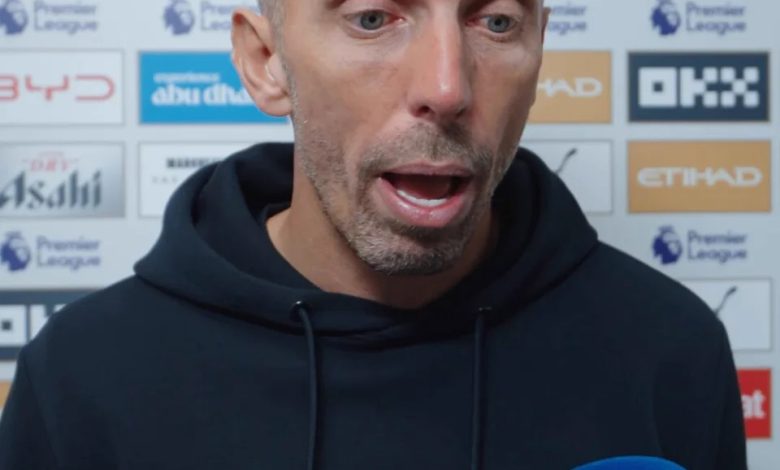
Ipswich Town manager Gary O’Neil is facing renewed scrutiny following a dramatic 3-2 defeat to Manchester City at the Etihad Stadium, with the result adding to concerns about the team’s recent form and the pressure surrounding the club’s head coach.
GARY O’NEIL UNDER FIRE AFTER IPSWICH TOWN’S 3-2 DEFEAT TO MANCHESTER CITY AS REPORTED POST-MATCH COMMENTS SPARK FURY AMONG SUPPORTERS
The narrow defeat was another painful moment for Ipswich, who travelled to Manchester hoping to produce a positive result against one of English football’s most formidable opponents. Instead, they left the Etihad Stadium without a point, extending a difficult run that has prompted questions about the team’s consistency, defensive organisation and ability to turn competitive performances into results.
However, it is the reported post-match comments attributed to O’Neil that have added another layer of controversy to the situation.
The Ipswich manager was reportedly quoted as saying:
“I know this is my fourth defeat.”
“You can never please the fans.”
“I don’t care what they say.”
If accurately reported, those comments would represent a defiant response from a manager facing growing scrutiny following another disappointing result.
Supporters naturally want their team to compete, particularly when the season becomes increasingly demanding. While losing away to Manchester City is hardly an unusual outcome for visiting teams, the circumstances surrounding a defeat can determine how supporters respond.
Ipswich may have competed in a closely contested match, but the final scoreline still left them empty-handed. For fans already concerned about the team’s results, another defeat was bound to generate frustration.
Nevertheless, the precise wording and context of the reported interview have not been independently verified. The remarks should therefore be treated as attributed comments rather than a confirmed transcript.
ANOTHER DEFEAT LEAVES IPSWICH SEARCHING FOR ANSWERS
Football can be an unforgiving business, particularly for managers attempting to establish consistency during a difficult period.
For Gary O’Neil, the reported fourth defeat represents another setback in a season in which Ipswich need to demonstrate that they can compete effectively and collect points against challenging opposition.
Manchester City away is one of the most demanding assignments in English football. The hosts possess considerable attacking quality, technical ability and experience of controlling matches against teams that attempt to disrupt their rhythm.
For visiting sides, the challenge is not simply to defend for long periods. They must also recognise opportunities to attack, maintain concentration and make the most of the chances that come their way.
A 3-2 scoreline suggests that the contest was closely fought, with Ipswich scoring twice but ultimately failing to secure a result.
That will make the defeat particularly frustrating for supporters. Scoring two goals away from home can provide encouragement, but it offers little consolation when the team still concedes three and returns without a point.
The immediate questions concern the balance between attack and defence.
Did Ipswich do enough to protect their goal? Were they able to manage Manchester City’s attacking pressure? Could they have made better decisions in decisive moments?
These are the kinds of questions O’Neil and his coaching staff must examine when reviewing the performance.
It would be unfair to conclude that every defeat reflects poor management. Opponents have strengths, individual mistakes happen, and matches can turn on small details.
However, managers are ultimately judged on how they respond to setbacks.
Ipswich now need to demonstrate that the lessons from the Manchester City match can translate into better performances and more positive results.
THE REPORTED COMMENTS THAT HAVE SPARKED DEBATE
The reported remarks attributed to O’Neil have become a major talking point because of their apparent defiance.
The first statement, “I know this is my fourth defeat,” suggests an acknowledgement of the team’s disappointing results.
That acknowledgement matters because supporters want to know that the manager understands the seriousness of the situation. Fans are unlikely to be satisfied with explanations that fail to address the problems affecting their club.
However, acknowledging a difficult run is only the beginning. The next step is to explain what must change and demonstrate that the coaching staff have a clear plan.
The second reported statement, “You can never please the fans,” is more contentious.
Some supporters might interpret it as a manager expressing frustration at the expectations placed upon him. Others could see it as an unnecessary confrontation with people whose backing remains important to the club.
Football supporters understand that winning every match is impossible. Even the strongest teams experience defeats, and away matches against elite opposition present obvious challenges.
What fans generally want is commitment, visible improvement and evidence that their club is moving in the right direction.
When performances fall short of those expectations, questions are inevitable.
A manager does not have to agree with every criticism, but dismissing supporters’ concerns can make an already difficult situation more complicated.
The third reported remark, “I don’t care what they say,” would be particularly provocative if confirmed.
It could be interpreted as an attempt to demonstrate mental toughness and insist that external criticism will not influence the team’s decisions.
Managers need that kind of resilience. Making tactical decisions based on every social media reaction would create instability and undermine long-term planning.
Nevertheless, there is a difference between refusing to be distracted by criticism and appearing unwilling to listen.
The strongest managers understand that they can maintain authority while acknowledging legitimate concerns.
For O’Neil, the priority must be to ensure that the discussion surrounding his reported comments does not overshadow the footballing work required to improve Ipswich’s results.
IPSWICH SUPPORTERS EXPECT MORE
Ipswich Town supporters have every reason to want their team to compete with determination, particularly when the club faces difficult opposition.
Travelling to the Etihad Stadium requires significant commitment from supporters, many of whom invest considerable time and money in following their team.
They do not expect Ipswich to dominate Manchester City in every department. They do, however, want to see their players approach the match with belief, discipline and a willingness to fight for a result.
A 3-2 defeat can generate mixed emotions.
On one hand, scoring twice against a team of City’s quality could provide encouragement. It may indicate that Ipswich possess attacking potential and can create problems for stronger opponents.
On the other hand, conceding three goals and losing the match leaves obvious room for improvement.
Supporters will naturally ask whether the team could have defended more effectively, managed important periods of the game better or made different decisions when the result was still within reach.
Those questions are part of football.
The concern becomes more serious when disappointing results begin to accumulate. Each additional defeat increases the importance of the next fixture and places greater pressure on the manager to deliver a response.
If supporters believe the same mistakes are being repeated, patience can become increasingly difficult to maintain.
O’Neil must therefore show that he recognises the frustrations surrounding the team.
That does not mean accepting personal abuse or allowing hostile reactions to dictate his decisions. Criticism of professional performance is legitimate, but threats and harassment are not.
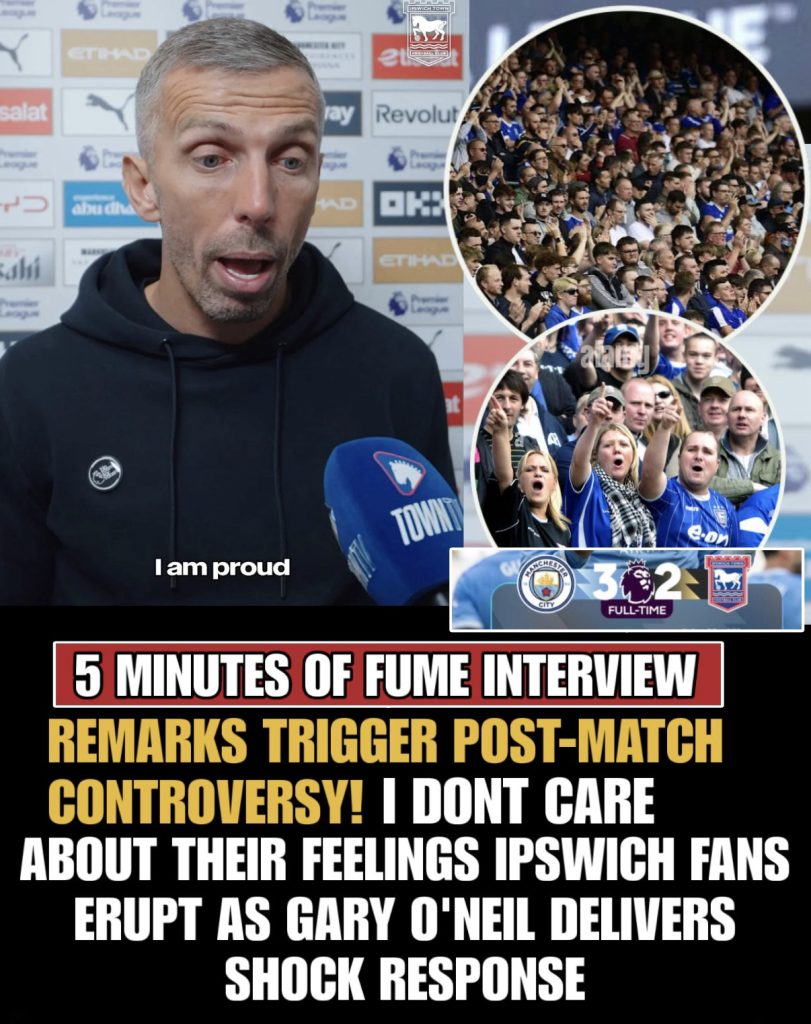
Supporters can question the manager’s tactics, selection and substitutions without attacking his personal life.
The most constructive outcome would be for the club and its supporters to remain focused on the same objective: improving Ipswich Town’s performances and securing better results.
WHAT WENT WRONG AGAINST MANCHESTER CITY?
The 3-2 scoreline raises several important questions, although the exact tactical causes cannot be established from the result alone.
Manchester City are renowned for their ability to maintain possession, move opponents around the pitch and exploit spaces when defensive organisation begins to break down.
Against such opposition, Ipswich would have needed concentration throughout the match.
Defensive positioning, communication between players and the ability to track runners can all become crucial when facing sustained attacking pressure.
One lapse in concentration can change the direction of a match, particularly when opponents have players capable of punishing mistakes.
Ipswich also needed to make their attacking opportunities count.
Scoring twice demonstrates that the team found a way to threaten City’s goal, but those efforts ultimately did not produce the desired outcome.
Against elite opposition, taking opportunities can be essential because chances may be limited.
The team must also manage the periods immediately after scoring or conceding. Maintaining concentration during those moments can determine whether a promising performance produces points.
O’Neil and his staff will need to review the match carefully rather than allowing the final scoreline or the surrounding criticism to determine their conclusions.
If the defensive problems were caused by individual errors, those mistakes must be addressed. If the team struggled to maintain its shape, tactical adjustments may be necessary. If fatigue or a lack of concentration played a role, the coaching staff must identify how to improve those areas.
The objective is not to find someone to blame for every setback.
It is to understand why Ipswich lost and establish a realistic plan to prevent similar problems from recurring.
PRESSURE IS BUILDING ON GARY O’NEIL
Every manager knows that results shape public opinion.
A team can produce encouraging performances for several weeks, but consecutive defeats can quickly change the atmosphere surrounding a club.
O’Neil must now navigate the challenge of managing his players while dealing with the questions that naturally follow another loss.
The pressure is not simply about the Manchester City match. It is about the wider picture and whether Ipswich can demonstrate the consistency required to achieve their objectives.
Supporters will want to see progress in several areas.
They will expect improved defensive organisation, greater composure when under pressure and more effective decision-making in attacking situations.
They will also want to see players taking responsibility rather than allowing frustration to affect their performances.
The manager’s role is to provide direction during difficult periods.
He must identify the right solutions, communicate his expectations clearly and ensure that the squad remains focused on the next challenge.
If O’Neil can guide Ipswich to a convincing performance in their next fixture, the atmosphere surrounding the club could improve considerably.
A positive result would provide evidence that the team is capable of responding to adversity.
However, another defeat would inevitably intensify the questions about the manager’s methods and whether the current approach is delivering sufficient progress.
That does not mean his position should automatically be considered untenable. Decisions about a manager’s future require a broader understanding of results, performances, expectations and the club’s long-term plans.
What is clear is that the pressure to produce a response has increased.
SHOULD A MANAGER IGNORE THE FANS?
The debate surrounding the reported comments raises a familiar question in football: should managers ignore criticism from supporters?
There are strong arguments on both sides.
Managers cannot afford to change their entire approach whenever they receive criticism. Tactical plans require consistency, and building a competitive team takes time.
A coach must sometimes make unpopular selections, trust younger players or persist with a system that supporters do not immediately understand.
If every decision is dictated by public opinion, it becomes difficult to establish a clear identity.
However, supporters are an essential part of football, and their concerns should not automatically be dismissed.
They follow the club closely, observe performances every week and often recognise when a team is struggling to meet expectations.
Their criticism may not always be correct, but it can still highlight issues worth examining.
The key is finding the balance between conviction and accountability.
O’Neil should be able to defend his decisions while remaining open to the possibility that changes are needed.
If the reported comments were made in the context suggested, the manager may need to clarify what he meant rather than allowing speculation to define the conversation.
Ultimately, the best response will come through the team’s performances.
A manager who improves results can rebuild confidence. A manager whose team continues to struggle will face more difficult questions, regardless of how confidently he responds to criticism.
THE NEXT MATCH COULD BE CRUCIAL
Ipswich cannot afford to spend too long dwelling on the defeat at the Etihad Stadium.
The team must now turn its attention to the next fixture and approach it with a clear plan.
The coaching staff will need to assess the players’ physical condition, review tactical weaknesses and determine whether changes are required.
The squad must also understand that the disappointment of one match cannot be allowed to affect the next.
Confidence is an important part of football. When players begin to doubt themselves, their decision-making can suffer, and small mistakes can become more frequent.
The best way to restore confidence is through disciplined preparation and positive performances.
Ipswich need to show that they can defend more effectively without sacrificing their attacking threat.
They must also demonstrate that they can manage difficult periods of matches and remain composed when opponents apply pressure.
For O’Neil, this is an opportunity to show that he can guide the team through adversity.
A strong response would help shift the conversation away from the reported post-match controversy and towards the team’s progress.
Another disappointing result would make it increasingly difficult to separate criticism of the performances from questions about the manager’s future.
The next match is therefore important, not because it will decide everything, but because it will provide another indication of how Ipswich are responding to the current challenges.
FINAL VERDICT
Gary O’Neil and Ipswich Town face an important period following their 3-2 defeat to Manchester City at the Etihad Stadium.
The result was painful because Ipswich scored twice but still left Manchester without a point. It has also intensified the discussion surrounding the team’s form and the pressure on the manager to deliver greater consistency.
The reported comments attributed to O’Neil have added another dimension to the story, particularly the suggestion that he believes supporters can never be pleased and that he does not care about their criticism.
However, those remarks must be independently verified before they can be treated as confirmed statements.
The central issue remains Ipswich’s performance and their ability to respond to defeat.
O’Neil must identify the problems exposed against Manchester City, communicate a clear plan to his players and demonstrate that the team can learn from its mistakes.
Supporters, meanwhile, have every right to demand accountability and better performances, provided their criticism remains focused on football rather than personal abuse.
A defeat against Manchester City does not automatically define a manager’s ability, but repeated setbacks can make it increasingly difficult to maintain confidence in a team’s direction.
Ipswich now need a response that provides reassurance, restores belief and shows that the players remain committed to the manager’s approach.
The question facing O’Neil is straightforward: can he turn the disappointment at the Etihad Stadium into a turning point for Ipswich Town?
The answer will not be found in the noise surrounding the reported interview. It will be found in the performances and results that follow.