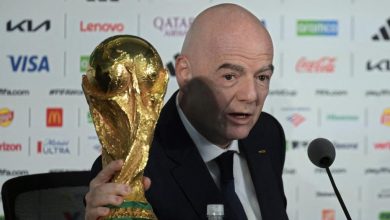
At the centre of the growing dispute is FIFA President Gianni Infantino, who has urged all 211 FIFA member associations to vote on a controversial proposal that would reshape how football’s biggest tournaments are managed commercially.
England Face World Cup Uncertainty as FIFA Warns of Major Consequences Over 2030 Boycott Threat
Tensions between FIFA and several of Europe’s biggest football nations have intensified after the governing body reportedly warned that countries refusing to support its proposed commercial restructuring could face significant consequences, raising fresh questions over the future of the 2030 FIFA World Cup.
At the centre of the growing dispute is FIFA President Gianni Infantino, who has urged all 211 FIFA member associations to vote on a controversial proposal that would reshape how football’s biggest tournaments are managed commercially.
The debate has already sparked strong opposition from several European football authorities, with concerns that the proposal could fundamentally alter the financial and governance structure of the World Cup. Reports suggest that England and other UEFA nations are among those carefully considering their position ahead of a crucial vote.
FIFA’s Controversial Proposal
According to the proposal, FIFA intends to establish a new commercial company known as FIFA Forward Enterprise (FFE). The organisation would take responsibility for managing the commercial rights and business operations of FIFA’s major competitions, including the men’s and women’s World Cups.
Unlike FIFA’s traditional structure, the new company would allow external investors to purchase minority stakes, providing an opportunity for private investment in football’s biggest competitions.
FIFA believes the initiative will generate unprecedented levels of revenue that can be reinvested across global football. Officials argue that the additional funding would significantly strengthen football development, particularly in smaller nations that rely heavily on FIFA grants.
Supporters of the proposal claim the move represents a modern approach to sports finance, allowing football to compete commercially with other global entertainment industries while creating long-term financial stability.
Growing European Resistance
Despite FIFA’s confidence, the proposal has generated widespread concern throughout Europe.
Several football associations and senior UEFA figures reportedly fear that introducing private investors into FIFA’s commercial operations could eventually give outside businesses too much influence over decisions involving the World Cup and other international competitions.
Critics argue that football’s governing structures should remain under the control of member associations rather than commercial investors whose primary objective is financial return.
The disagreement has developed into one of the most significant political battles within world football in recent years, with negotiations expected to continue before FIFA’s September deadline.
Infantino Sets September Deadline
FIFA has reportedly instructed all 211 member associations to make their position known by September 19.
Associations supporting the proposal are expected to gain access to an expanded financial package designed to boost football development worldwide.
Reports indicate that each member association could receive funding worth as much as $40 million if the proposal receives sufficient backing.
For many smaller football nations, that level of investment could dramatically improve infrastructure, coaching programmes, youth academies and grassroots development.
However, countries choosing to oppose the proposal would reportedly remain under the current funding model and would not benefit from the additional financial incentives linked to FIFA Forward Enterprise.
Concerns Over Potential Punishments
Perhaps the most controversial aspect of the ongoing debate involves suggestions that nations openly opposing FIFA’s plans—or attempting to organise any boycott—could face serious repercussions.
While FIFA has not publicly confirmed any disciplinary action against specific countries, reports have suggested that associations refusing to cooperate could risk losing access to enhanced FIFA funding and future financial programmes.
There are also concerns that any organised boycott of FIFA competitions could potentially breach FIFA regulations, opening the door to disciplinary measures depending on the circumstances.
At present, no formal sanctions have been announced against England or any other national association, and any potential penalties would depend on FIFA’s statutes and the actions ultimately taken by member federations.
What Happens Next?
With the September 19 deadline approaching, football’s governing bodies face a decision that could shape the commercial future of the sport for decades.
If the proposal is approved, FIFA Forward Enterprise would become one of the biggest structural changes in the organisation’s history, introducing private investment into the commercial management of football’s flagship tournaments.
If opposition grows, however, FIFA could face one of its most significant governance challenges in years, with the possibility of further disputes between the global governing body and UEFA’s leading nations.
For England and the rest of world football, the coming weeks promise to be pivotal as the debate over the future of the World Cup reaches a critical stage.