The incident, which occurred during a dramatic match, appeared to leave many fans questioning how the current handball laws are being applied, particularly when an accidental touch with the hand or arm is involved in the build-up to a goal.
🚨 PREMIER LEAGUE STATEMENT ISSUED AFTER CONTROVERSIAL MANCHESTER UNITED GOAL — “FOOTBALL IS TRULY GONE”
Manchester United found themselves at the centre of another major refereeing debate after a controversial goal sparked confusion, frustration and heated discussion among supporters.
The incident, which occurred during a dramatic match, appeared to leave many fans questioning how the current handball laws are being applied, particularly when an accidental touch with the hand or arm is involved in the build-up to a goal.
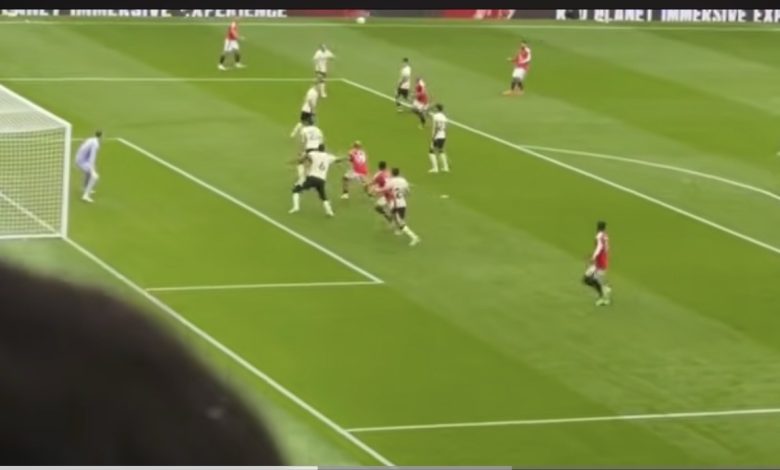
Manchester United eventually went 2–1 ahead in the 58th minute, with the goal officially credited as an own goal after the ball was diverted into the net by Jacob Greaves.
However, the circumstances surrounding the goal immediately attracted attention.
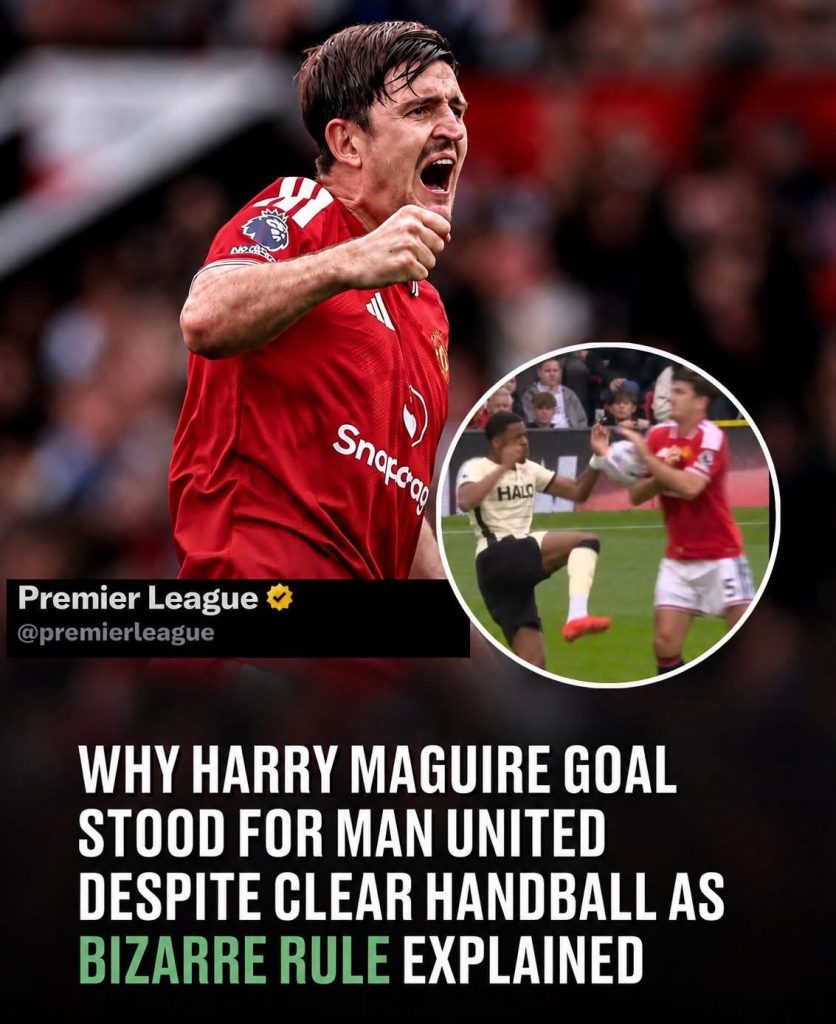
The ball clearly appeared to make contact with Harry Maguire’s hand or arm during the sequence. While the contact was considered accidental, the incident raised an important question: should the goal have been disallowed because the Manchester United player had touched the ball with his hand immediately before it ended up in the net?
That is where the wording of the football laws becomes particularly important.
Under Law 12 concerning fouls and misconduct, there is a specific provision regarding handball and goals. The law makes clear that a goal is not allowed when a player scores directly after the ball touches their hand or arm, even where the contact itself is accidental.
In other words, had Maguire been the player who directly put the ball into the net after the accidental handball, the goal would not have stood.
But that was not what happened.
Instead, the ball continued through the incident before being diverted into the Manchester United net by Jacob Greaves.
Because Greaves was the player who ultimately put the ball into his own goal, the goal was recorded as an own goal rather than a goal scored directly by Maguire.
That distinction became the key factor.
And it is precisely this small but hugely significant detail in the laws that allowed Manchester United to escape what could otherwise have been a major controversy.
One supporter summed up the frustration by questioning the way the rule is being interpreted.
“The bizarre rule only applies for an accidental handball. His was deliberate and therefore the rule shouldn’t have been applied,” the fan argued.
That opinion reflects the confusion surrounding the incident, with supporters debating whether the handball should even have been regarded as accidental.
Others, however, pointed to the actual wording of the laws and argued that the referee’s decision was consistent with the regulations.
The incident demonstrates one of the strangest realities of modern football: sometimes an extremely small technical distinction can completely change the outcome of a match.
A player can accidentally touch the ball with their hand, yet the consequences depend heavily on what happens immediately afterwards.
If that player scores directly, the goal can be disallowed.
If an opponent subsequently puts the ball into their own net, however, the situation is treated differently.
That was effectively the escape route Manchester United benefited from.
The goal was confirmed in the 58th minute, sending United 2–1 ahead and creating another talking point in a match already filled with drama.
For Manchester United supporters, the most important thing was obviously the scoreline.
For everyone else, however, the incident became another example of how complicated the modern interpretation of football’s laws has become.
Football has always contained controversial decisions. Handball has arguably been one of the most difficult areas for referees, players and supporters to understand because the law has changed significantly over the years.
The introduction of VAR was supposed to provide greater clarity and eliminate obvious mistakes.
Yet incidents like this often produce the opposite reaction.
Rather than ending arguments, technology can sometimes lead to even greater scrutiny because every decision is examined frame by frame.
Fans can now watch exactly when the ball touches a player’s arm, where the player’s arm is positioned, whether the movement was deliberate and what happened immediately afterwards.
That level of examination can make football feel increasingly technical.
One moment that would previously have been debated for a few minutes can now dominate conversations for hours.
And this Manchester United incident is a perfect example.
The controversy is not simply about whether the ball touched Maguire’s arm.
It is about what happened after that contact.
The laws distinguish between a player directly scoring following an accidental handball and an opponent subsequently scoring an own goal.
That distinction ultimately meant that Manchester United were able to keep their goal.
For supporters who believe the ball should never have resulted in a goal after touching a player’s arm, the decision can understandably feel bizarre.
For those following the letter of the law, however, there is a logical explanation.
This is where the phrase “the correct application of football rules on the pitch will always remain golden” becomes relevant.
Referees are not responsible for deciding whether a rule feels fair in every individual situation.
Their responsibility is to apply the laws as they are written.
Sometimes those laws produce outcomes that supporters love.
Sometimes they produce outcomes that supporters absolutely hate.
But football cannot function if the rules are applied differently depending on how popular a particular decision is.
Manchester United therefore escaped what could have been a major calamity.
Had Maguire been credited with the goal himself, the handball provision would have become decisive.
Instead, Greaves’ involvement changed the classification of the goal and allowed it to stand.
That technical distinction may appear incredibly small, but in football, small details can decide matches.
A single deflection can change the identity of a goalscorer.
A single touch can determine whether a goal is legal.
And a single interpretation can potentially change the entire course of a game.
The controversy also demonstrates why supporters need to be careful when describing refereeing decisions as simply “wrong” without considering the full wording of the laws.
What looks obvious in real time can become significantly more complicated when the regulations are examined.
At the same time, it is understandable why supporters remain frustrated.
Football is supposed to be simple at its core: score more goals than your opponent.
But modern football increasingly contains layers of technical regulations governing handball, offside, goalkeeper movement, fouls, deliberate actions and VAR intervention.
The Maguire-Greaves incident has therefore become another example of that growing complexity.
Manchester United will not care too much about the debate if the result ultimately benefits them.
The important fact from their perspective is that the goal stood and they were allowed to take a 2–1 lead.
For their opponents and neutral supporters, though, the incident is likely to remain a talking point.
Was the handball truly accidental?
Was the law applied correctly?
Should an own goal following an accidental handball really be treated differently from a player scoring immediately after the same contact?
Those questions will continue to generate arguments.
What is certain is that Manchester United escaped a potentially disastrous moment.
The goal survived the controversy, the scoreline remained intact, and the technical wording of the law ultimately proved decisive.
Whether supporters believe that is fair is another question entirely.
And perhaps that is the most frustrating part of modern football.
Sometimes the difference between a perfectly legitimate goal and a disallowed one is not what the fans believe they saw.
It is hidden in a few carefully written words inside the rule book.
On this occasion, those words went Manchester United’s way.