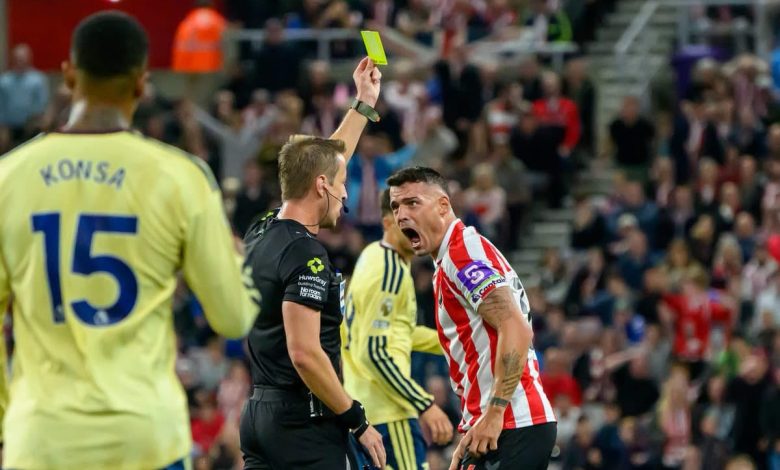
BREAKING NEWS FA DROP BOMBSHELL SUNDERLAND STAR FACING PUNISHMENT AFTER PREMIER LEAGUE RELEASES SAKA INCIDENT AUDIO
PREMIER LEAGUE EXPLAIN WHY VAR DID NOT OVERTURN REINILDO’S SECOND YELLOW CARD AFTER SAKA INCIDENT
The Premier League has explained why VAR did not recommend that referee John Brooks overturn the second yellow card shown to Reinildo during Saturday night’s dramatic clash.
The incident occurred deep into stoppage time and quickly became one of the biggest talking points of the match, with Arsenal eventually securing a 2-0 victory after Bukayo Saka converted the resulting penalty.
Reinildo was shown a second yellow card after challenging Saka inside the penalty area. Because it was his second booking of the game, the defender was sent off, leaving his team to finish the match with 10 men.
There was immediate debate over whether the decision should have been reviewed by VAR.
Some supporters questioned why the officials did not intervene, particularly because the challenge appeared to involve a genuine attempt to play the ball. However, the Premier League has now released an explanation, along with the audio between the match officials, giving a clearer picture of why the decision stood.
WHY VAR DID NOT OVERTURN THE DECISION
The key factor was the distinction between a genuine attempt to play the ball and whether a foul had actually occurred.
The officials accepted that Reinildo was attempting to play the ball.
That is important because the laws of the game make a distinction between denying an obvious goal-scoring opportunity through a genuine attempt to play the ball and situations where there is no genuine attempt.
The VAR discussion made clear that the officials believed Reinildo had made a genuine attempt.
The referee said:
“He attempts to play the ball with his feet.”
VAR then assessed the situation and agreed that the challenge fell into the category of a genuine attempt to play the ball.
The VAR official said:
“He’s clearly in. I’m happy it’s denying an obvious goal-scoring opportunity – genuine attempt for the ball.”
However, that did not mean the challenge was considered legal.
The officials were satisfied that Reinildo had still committed a foul on Saka.
VAR therefore concluded that the original decision should remain.
The official added:
“No.17 is on a yellow card. Foul and sanction is confirmed.”
That final line effectively explains the entire decision.
VAR was not saying that Reinildo had deliberately committed a cynical challenge or that he had made no attempt to play the ball. Instead, the officials believed he genuinely tried to win possession but ultimately fouled Saka while doing so.
Because Reinildo was already on a yellow card, the foul resulted in a second booking and therefore a red card.
WHY THE PENALTY ALSO MATTERED
The timing of the incident made the decision even more significant.
The challenge happened in stoppage time, with the game still finely balanced.
Once the referee awarded the penalty, Arsenal were presented with a huge opportunity to put the result beyond doubt.
Saka stepped forward and calmly converted from the spot, giving the visitors a 2-0 lead.
The penalty therefore became directly connected to the red-card controversy.
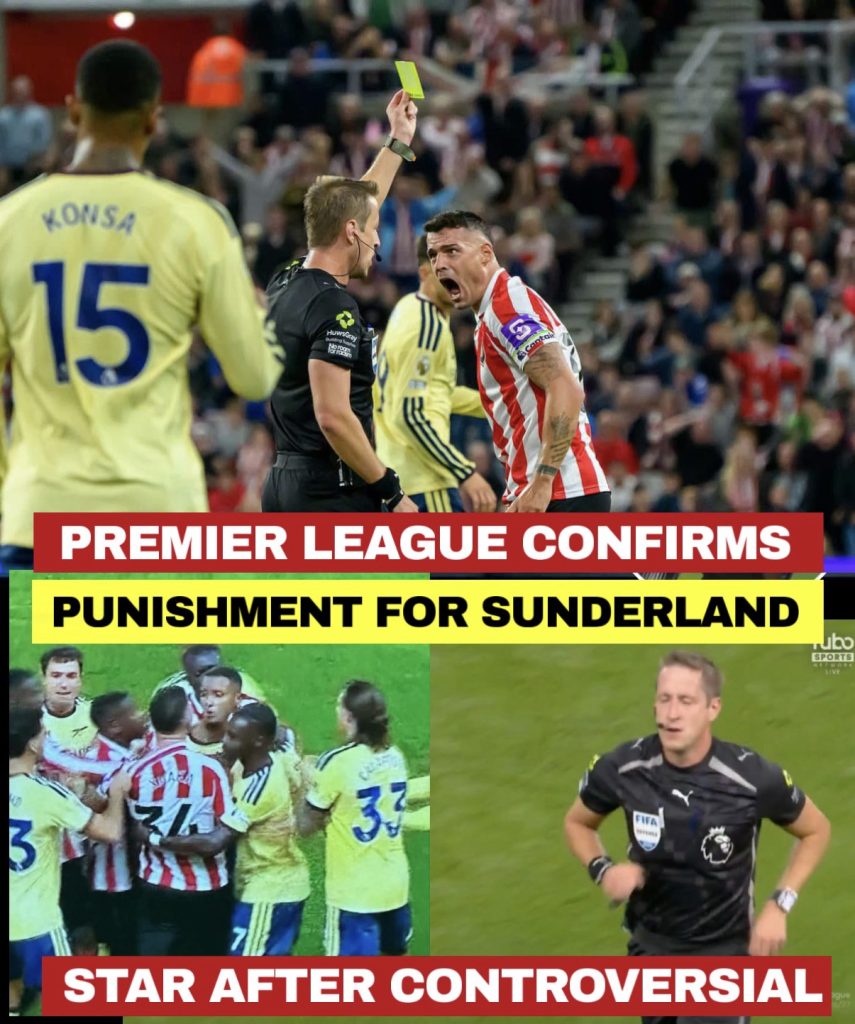
From Reinildo’s perspective, the sequence could hardly have been more damaging.
He committed a foul while attempting to challenge Saka, received his second yellow card and was sent off, before watching Arsenal convert the resulting penalty.
For Arsenal, however, it was the kind of late moment that can turn a difficult match into a comfortable victory.
THE VAR AUDIO PROVIDES MORE CLARITY
The release of the audio has given supporters a rare insight into how the officials reached their conclusion.
Rather than treating the incident as a potential straight red-card offence, VAR focused on whether the challenge denied an obvious goal-scoring opportunity and whether Reinildo had made a genuine attempt to play the ball.
The officials were satisfied on both points.
They determined that the challenge did involve an attempt to play the ball, meaning the situation fell under the relevant law concerning DOGSO.
But the crucial point was that a genuine attempt to play the ball does not automatically mean there is no foul.
A player can attempt to win the ball and still commit a foul.
That was ultimately the interpretation reached by the officials.
The VAR therefore did not believe there was a basis to overturn the referee’s decision.
WHY VAR COULD NOT SIMPLY REMOVE THE SECOND YELLOW
Another major point surrounding the controversy is the role of VAR when a player receives a second yellow card.
VAR does not generally intervene simply because there is disagreement over whether a yellow-card offence should have been given.
VAR’s remit is primarily concerned with serious incidents such as goals, penalties, straight red cards and mistaken identity.
A second yellow card is not itself a category for VAR review in the same way as a straight red card.
That means the officials had to determine whether there was a serious error connected to the penalty or a potential straight-red situation that fell within VAR’s remit.
After reviewing the incident, they were satisfied that the referee had correctly identified a foul.
Therefore, there was no reason for VAR to recommend an overturn.
FANS STILL DIVIDED OVER THE INCIDENT
Despite the explanation, the incident is unlikely to end the debate among supporters.
Football fans frequently disagree over challenges of this nature, particularly when a defender clearly appears to be attempting to play the ball.
One side of the argument is that Reinildo made a genuine attempt to win possession and therefore should not have been punished as harshly.
The other view is that intent alone does not erase the foul.
If the defender catches the opponent while attempting to make the challenge, the referee can still award a free-kick or penalty depending on where the offence occurred.
That appears to be exactly what happened here.
The Premier League’s explanation does not necessarily settle whether every supporter believes the referee made the correct call. What it does provide is clarity over how the officials interpreted the incident.
They believed Reinildo genuinely attempted to play the ball.
They also believed he fouled Saka.
And because Reinildo had already been booked, the foul resulted in a second yellow card and his dismissal.
A NIGHT OF DRAMA FOR ARSENAL
The late incident ultimately became another defining moment in Arsenal’s 2-0 victory.
Saka’s penalty sealed the result, while Reinildo’s dismissal ensured that the final moments were dominated by controversy rather than simply the scoreline.
For Arsenal, the outcome was straightforward: they secured the three points and kept their opponents under pressure until the final whistle.
For Reinildo and his teammates, the ending was far more frustrating.
The defender may have genuinely been trying to play the ball, as the VAR audio confirms, but that did not protect him from being penalised for the resulting foul.
The Premier League’s explanation therefore comes down to a simple distinction: genuine attempt does not mean no foul.
VAR agreed with the referee that Reinildo had attempted to play the ball, but it also agreed that he had fouled Saka and that the sanction should stand.
With the defender already on a yellow card, the decision meant a second booking, a red card and a penalty.
Saka then did the rest.
The incident will undoubtedly continue to generate debate, but the official audio has now made one thing clear: VAR did not recommend an overturn because the officials believed John Brooks had correctly identified a foul, while Reinildo’s genuine attempt to play the ball did not remove the offence.