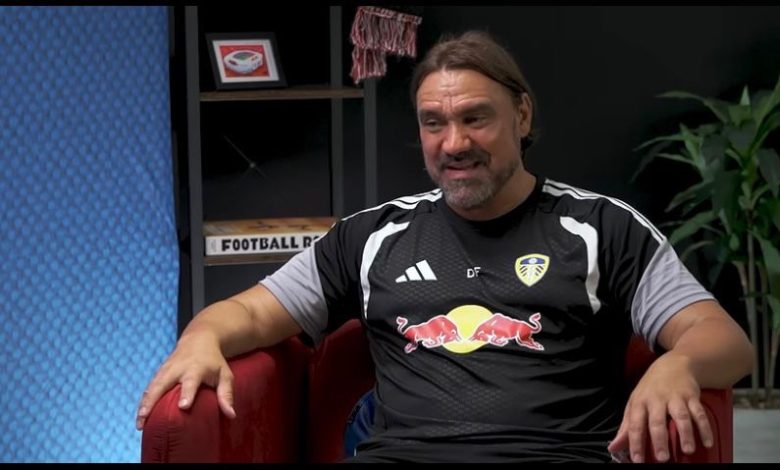
Paul Merson has found himself at the centre of a furious online reaction after an awkward exchange with Leeds United manager Daniel Farke left football supporters questioning the former Arsenal star’s approach to interviewing.
“HE HAS FAILED AS A PROFESSIONAL JOURNALIST” — PAUL MERSON SLAMMED AFTER AWKWARD DANIEL FARKE INTERVIEW
Paul Merson has found himself at the centre of a furious online reaction after an awkward exchange with Leeds United manager Daniel Farke left football supporters questioning the former Arsenal star’s approach to interviewing.
What began as a routine Sky Sports discussion about Leeds’ performances, Farke’s tactical decisions and the pressure surrounding the club quickly turned into one of the most talked-about moments of the programme.
Merson, known for his outspoken opinions and willingness to ask difficult questions, put Farke on the spot with a blunt question about whether he was genuinely getting the maximum out of the players available to him.
It was a question that immediately changed the atmosphere.
Farke, who has built a reputation for remaining composed during difficult press conferences and interviews, appeared to pause before answering. That moment was enough for viewers to flood social media with reactions, with some praising Merson for asking a question they felt needed to be addressed, while others accused him of crossing the line.
One furious reaction summed up the mood among Merson’s critics:
“He failed as a professional journalist.”
Another supporter simply wrote:
“I was so disappointed.”
And one particularly frustrated viewer asked:
“WTF was that question for?”
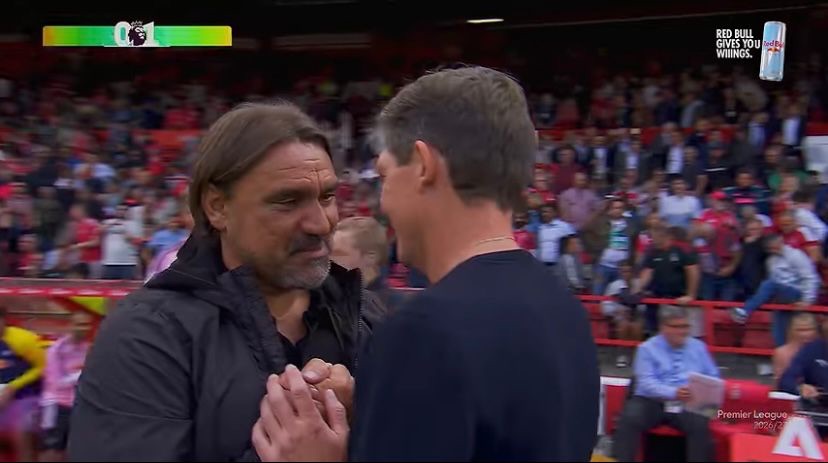
The controversy has quickly grown because of the nature of the question and the way it was delivered.
Merson did not simply ask Farke about Leeds’ recent results. Instead, the former Arsenal midfielder reportedly challenged whether the manager genuinely believed his current approach was good enough to achieve the club’s ambitions.
That immediately placed Farke in a difficult position.
The Leeds boss could either defend his methods, explain why he continues to trust his tactical philosophy or acknowledge that certain aspects of the team’s performances needed improvement.
For some supporters, that is exactly what football journalism should be about.
Managers at major clubs are constantly questioned about tactics, substitutions, transfers and performances. Farke is no exception, particularly when expectations around Leeds are high.
Merson’s supporters therefore believe the question was completely legitimate.
They argue that television pundits should not be afraid to ask uncomfortable questions simply because the manager might not like them. From that perspective, Merson was doing his job by challenging Farke rather than allowing the conversation to remain predictable.
However, his critics saw things very differently.
Some viewers felt the question lacked the clarity and constructive tone expected from an experienced football broadcaster. Instead of producing an insightful tactical discussion, they felt it created an unnecessarily uncomfortable moment.
The pause from Farke became the biggest talking point.

Rather than immediately responding, the Leeds manager appeared to take a moment to process what had been put to him. That hesitation was interpreted in completely different ways depending on which side of the debate supporters were on.
Some believed Farke had simply been caught off guard by the directness of the question.
Others believed the pause demonstrated that Merson had touched on a genuine issue within the Leeds camp.
And then there were those who felt the entire exchange was simply unnecessary.
The criticism became particularly fierce because Merson is not an inexperienced television personality. Having spent years working in football broadcasting and analysis, supporters expect him to understand how to challenge a manager while still creating a meaningful conversation.
That is why accusations that he had “failed” as a journalist began circulating online.
Of course, describing Merson as having “finished his career” is more a reflection of the anger among some viewers than an indication that his broadcasting career has actually ended.
The former Arsenal midfielder has developed a reputation throughout his media career for being brutally honest and occasionally unpredictable. His analysis can divide opinion, but that willingness to speak his mind is also one of the reasons he remains such a recognisable figure in football broadcasting.
The Farke exchange simply provided another example of why Merson continues to generate debate.
For Leeds supporters, however, the focus is likely to remain firmly on their manager and his team.
The question of whether Farke is getting the best out of his squad is a legitimate one, particularly when results and performances fail to match expectations.
Every manager eventually reaches a point where tactical decisions are scrutinised more closely. Selections are questioned. Substitutions are analysed. Transfer decisions are revisited. Players’ performances are dissected.
Farke understands that better than most.
The German has experienced pressure throughout his managerial career and has generally responded by defending his football philosophy rather than allowing outside criticism to dictate his decisions.
That is unlikely to change because of one Sky Sports exchange.
Nevertheless, the incident has demonstrated how quickly a single question can dominate a football discussion.
Instead of supporters debating Leeds’ tactics or individual performances, much of the conversation shifted towards Merson himself.
Was the question fair?
Was it necessary?
Did it genuinely challenge Farke in a meaningful way?
Or was it simply designed to create a reaction?
Those questions are now being debated heavily among supporters.
Interestingly, the disagreement also highlights the wider divide surrounding football punditry.
Some fans want former players to be aggressive and confrontational. They want pundits to say what supporters are thinking, even if the comments are uncomfortable.
Others prefer analysis that is calmer, more detailed and tactically focused.
Merson sits firmly in the first category.
He has never been afraid to make strong statements, and his personality often guarantees that his opinions become part of the wider football conversation.
This time, however, the reaction has been particularly intense.
The phrase “I was so disappointed” has been repeated by critics who believe the interview could have been handled differently.
Meanwhile, Merson’s supporters are likely to argue that football has become too sensitive and that managers should be prepared to answer difficult questions when their teams are under pressure.
For Farke, the best response will ultimately come on the pitch.
Whatever was said during the Sky Sports discussion, Leeds’ ambitions will not be decided by one television interview. They will be determined by results, performances and whether Farke can deliver the level of football expected from his side.
For Merson, meanwhile, the controversy is unlikely to damage his reputation as one of the most outspoken voices in English football media.
If anything, it has once again demonstrated his ability to dominate the conversation.
Whether supporters believe he asked an important question or simply went too far, one thing is certain: they were talking about Paul Merson long after the interview ended.
And in modern football broadcasting, that alone guarantees that the debate is far from over.