THE CHANT THAT CHANGED THE GAME: “THE FREQUENCY AT WHICH THEY SANG THAT CHANT MADE US LOSE OUR MOMENTUM” — HOW THE 2–1 LEAD SLIPPED AWAY
THE CHANT THAT CHANGED THE GAME: “THE FREQUENCY AT WHICH THEY SANG THAT CHANT MADE US LOSE OUR MOMENTUM” — HOW THE 2–1 LEAD SLIPPED AWAY
Football matches can change in a matter of seconds. A team can be completely in control, riding a wave of confidence, only for the atmosphere inside the stadium to shift and alter the momentum of the contest.
That appeared to be the story behind a dramatic encounter in which a 2–1 lead eventually disappeared, leaving supporters wondering how a match that seemed to be heading in one direction suddenly turned against their team.
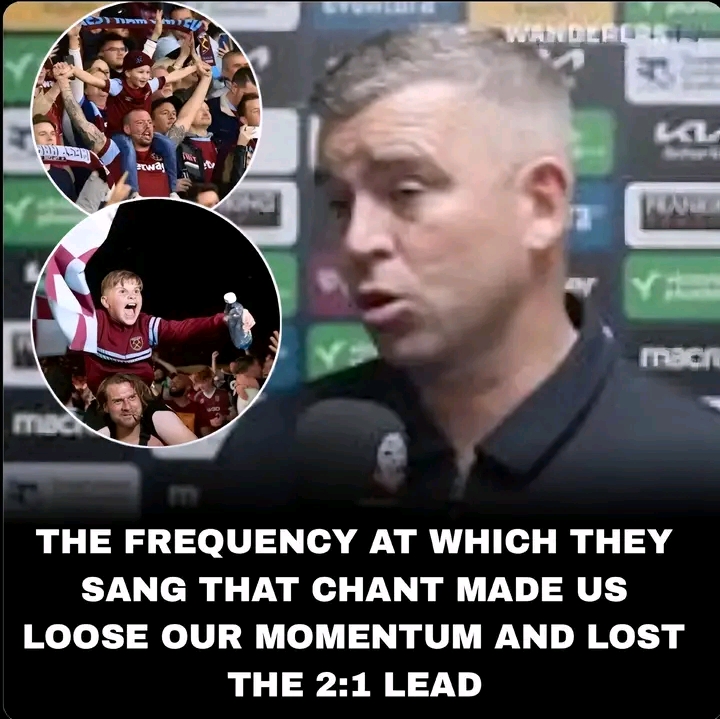
Speaking about the decisive period of the game, one particularly striking observation has emerged: “The frequency at which they sang that chant made us lose our momentum and lose the 2–1 lead.”
It is a statement that perfectly captures the unusual relationship between football, supporters and momentum.
THE MOMENTUM WAS CLEAR
After taking a 2–1 advantage, the team appeared to have everything going in its favour. The players had found confidence, the passing was beginning to flow and the opposition looked increasingly uncomfortable.
At that stage, the priority was simple: control the game, manage the tempo and protect the advantage.
But football is rarely that straightforward.
Rather than allowing the match to settle, the opposition supporters continued to make their presence felt. Their chanting became increasingly frequent, creating an intense atmosphere that appeared to lift the visiting players while putting additional pressure on the team defending its lead.
For supporters inside the stadium, these moments can feel enormous.
Every chant, every roar and every reaction to a tackle or missed opportunity can influence the emotional temperature of a match.
THE CHANT BECAME PART OF THE STORY
The comment about the frequency of the chant is particularly interesting because it highlights something that is sometimes overlooked when analysing football.
Supporters are not simply spectators.
They can become an active part of the contest.
When a stadium is loud for prolonged periods, players can find it more difficult to communicate with teammates. The opposition can also become energised by the belief coming from the stands.
That appeared to happen during the crucial period after the 2–1 goal.
Instead of the match becoming calmer, the atmosphere continued to build.
The repeated chanting gave the opposition supporters an opportunity to maintain pressure psychologically, while their players appeared to feed off the noise.
Suddenly, the team that had been celebrating its advantage found itself having to defend more than expected.
FROM CONTROL TO PRESSURE
The biggest problem was arguably not the chant itself, but what happened on the pitch while the atmosphere intensified.
Football teams often become more conservative after taking the lead. Players drop deeper, possession becomes more cautious and the opposition is allowed additional territory.
If that happens while the opposition is receiving encouragement from a passionate crowd, the pressure can become difficult to withstand.
The 2–1 lead therefore became less secure with every passing minute.
The team needed to regain control of possession and slow the game down, but the momentum had already begun shifting.
That is where the significance of the chant comes into the discussion.
It may not have directly caused the equaliser, but it arguably contributed to the atmosphere that surrounded the collapse.
THE EQUALISER CHANGED EVERYTHING
Once the opposition found a way back into the match, the psychological advantage immediately changed hands.
The team that had been ahead suddenly had to respond.
Players who had previously looked confident were now facing a completely different challenge. Every mistake became more noticeable, every misplaced pass created anxiety and every opposition attack carried greater danger.
Meanwhile, the supporters behind the opposition continued to make themselves heard.
The equaliser was more than just a goal.
It represented the moment when the 2–1 advantage stopped being a source of confidence and became a reminder of what had been lost.
WAS THE ATMOSPHERE REALLY RESPONSIBLE?
There will naturally be debate over how much responsibility can be placed on supporters and their chanting.
Ultimately, football matches are decided by what happens on the pitch.
Players make the passes. Defenders make the challenges. Goalkeepers make the saves. Attackers finish chances.
However, atmosphere can influence the circumstances in which those decisions are made.
A relentless crowd can increase pressure. A powerful chant can create belief. A sudden roar can transform the emotional state of an entire team.
That does not mean supporters physically determine the outcome.
Instead, they can influence the psychological environment surrounding the players.
In this particular case, the observation about the chant offers an interesting explanation for why the team struggled to maintain the momentum it had built after taking a 2–1 lead.
A LESSON FOR THE FUTURE
The biggest lesson may be that taking the lead is only part of the job.
Once a team goes 2–1 ahead, it must continue playing with purpose.
Dropping too deep, surrendering possession and allowing the opposition to build confidence can be dangerous — particularly when the atmosphere is working against you.
The best teams understand how to manage these situations.
They slow the game when necessary, keep possession, remain composed and make the opposition chase the ball.
Had that happened consistently after the 2–1 goal, the story might have been very different.
Instead, the momentum shifted.
The chanting continued.
The pressure grew.
And eventually, the lead disappeared.
THE BIGGER PICTURE
For supporters, the incident will undoubtedly remain one of the most frustrating aspects of the match.
A 2–1 lead should have represented an opportunity to take control and finish strongly.
Instead, the team allowed the opposition back into the contest.
Whether the chant truly caused the collapse will remain a matter of opinion, but there is no denying that the atmosphere played an important role in the drama of the occasion.
Football is ultimately a game of skill, tactics and decisions — but it is also a game of emotion.
The sound from the stands can inspire one team, unsettle another and completely change the feeling of a match.
And on this occasion, that shift in atmosphere appeared to coincide with the moment the 2–1 lead began to slip away.
For the players, the message going forward is clear: when you take the lead, control the game — regardless of what is happening in the stands.